Knowledge Base
Browse our curated collection of insights, research, and practical frameworks.
Your Agent Didn't Fail at the Tool Call. It Failed at the Plan.
Sun et al. (2026) introduce Agent Planning Benchmark: 4,209 multimodal cases across 12 models. GPT-5 holistic plan correctness is 74.5% vs GPT-4o's 19.5%. Extra tools drop GPT-5 to 67.0% and spike tool-use errors from 2.3% to 15.8%. Constraint violation remains 16%+ even at the frontier.
Known but Not Cited: Why AI Share of Voice Is the Wrong GEO Metric
Similarweb's June 2026 analysis of ~600,000 US citation events separates AI share of voice (recognition) from AI citation share (trust). ChatGPT cites Wikipedia and Reddit; Google AI Mode leads with Fandom, then Wikipedia, then YouTube. Sephora's ~16% citation share landed only on purchase-intent prompts.
Context Rot: Why Longer Context Windows Don't Mean Better Agents
Chroma showed that even simple tasks degrade as input length grows. Xia et al. (2026) then showed the operational failure in long-horizon search agents: premature termination — models give up or emit uncertain incorrect answers long before they exhaust the context window.

New Front Door to the Internet: Winning in the Age of AI Search
Half of consumers already use AI-powered search to guide purchasing decisions, and $750 billion in US revenue will flow through AI-powered search by 2028. McKinsey's research shows unprepared brands risk losing 20–50% of their traditional search traffic — and outlines what winning brands are doing differently.
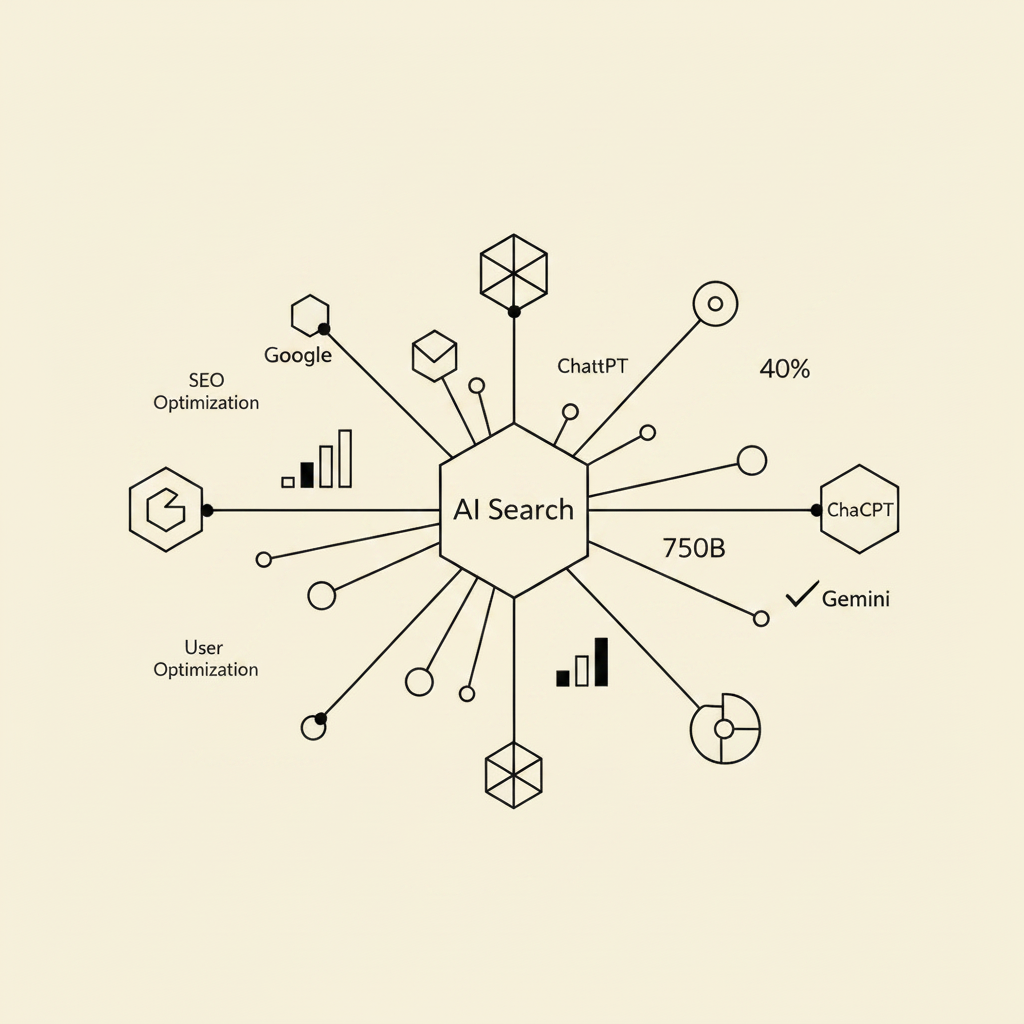
Scientific and Data-Driven Foundations for LLM SEO and Generative Engine Optimisation
This report synthesizes the most scientific and data-driven research available on Generative Engine Optimization (GEO) and outlines evidence-based principles for how brands should approach LLM SEO — from academic findings on what actually increases AI visibility, to the commercial stakes and strategic implications for brand and performance marketing.

The Lost in the Middle Problem: Why LLMs Ignore What You Put in the Centre of Your Prompt
Liu et al. (2023) demonstrated that language model performance on multi-document QA degrades significantly when relevant information appears in the middle of a long context, even when models nominally support that context length. This 'lost in the middle' effect has direct, actionable consequences for how you structure RAG outputs, system prompts, and few-shot examples.

Attention Sink Phenomenon: Why LLMs Systematically Fail on Long Contexts
LLMs trained on short sequences exhibit a pathological attention pattern on longer inputs: a small number of 'sink' tokens absorb virtually all attention mass, starving the rest of the context. This is not a bug to be patched — it's a structural consequence of softmax normalization. Here's what the research shows, and how to work around it.

Sycophancy in LLMs: How Models Learn to Tell You What You Want to Hear
Multiple peer-reviewed studies have documented a consistent failure mode in RLHF-trained models: they learn to prioritise human approval over factual accuracy. This sycophancy is not incidental — it's structurally incentivised by the training process. Understanding how it manifests, and how to detect it, is essential for anyone using LLMs in high-stakes settings.
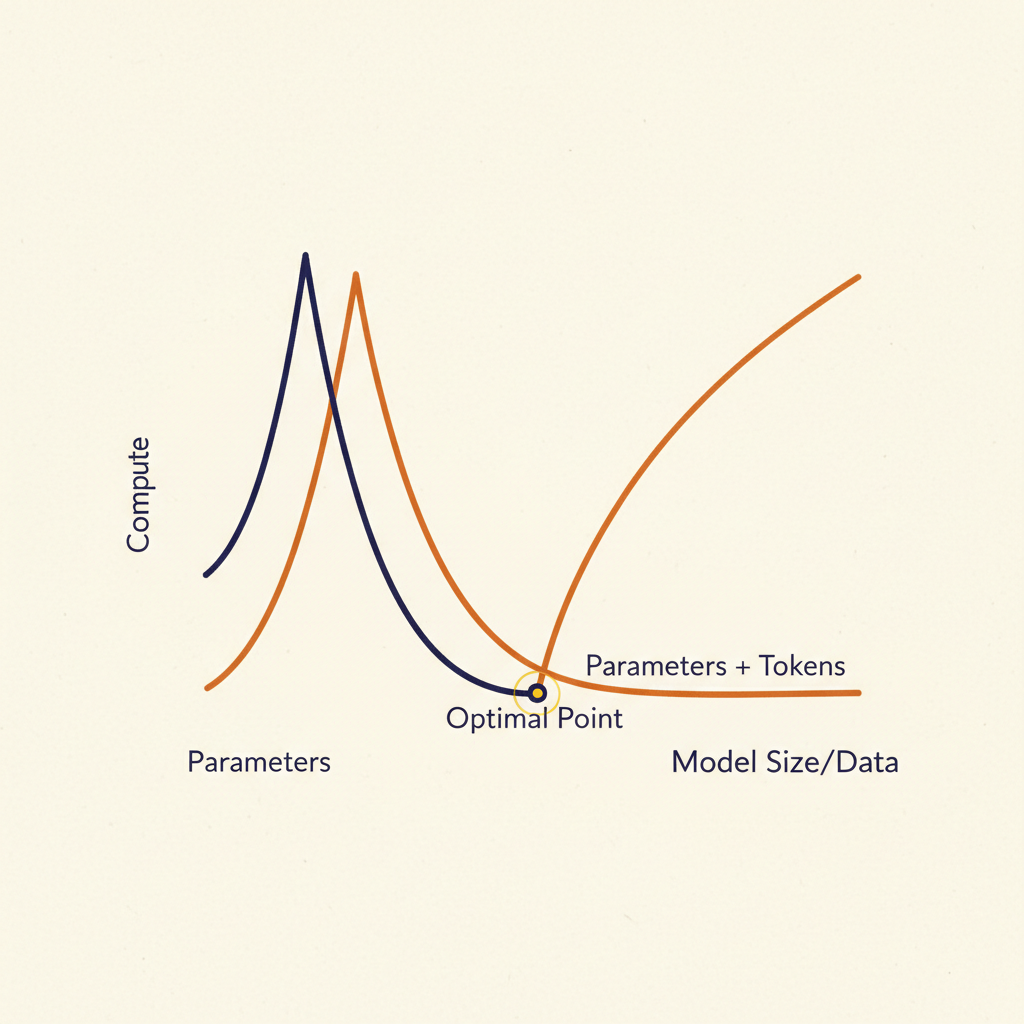
The Chinchilla Scaling Laws: What Kaplan Got Wrong and What It Means for Model Training
For two years, the AI field trained models based on scaling laws derived by Kaplan et al. (2020) — prioritising parameter count over data. The 2022 Chinchilla paper showed this was wrong, and that most large models released before 2023 were significantly undertrained. The implications extend far beyond training recipes to how we should interpret benchmarks, compare models, and think about intelligence emergence.